






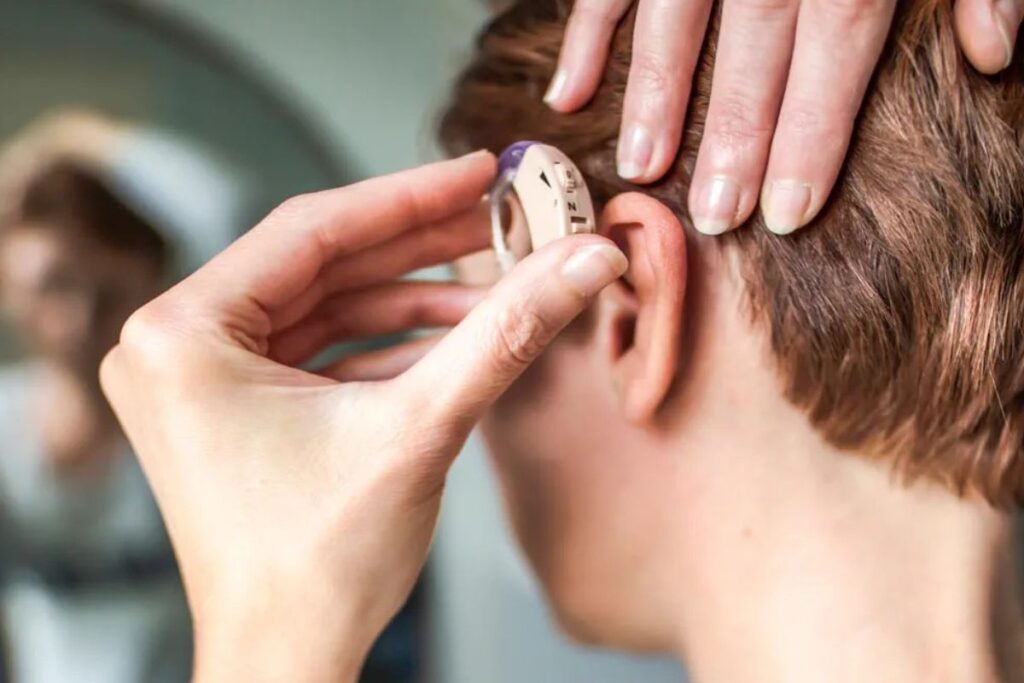
Over-the-counter (OTC) hearing aids bypass state e-waste programs and right-to-repair laws through a glaring regulatory loophole: their classification as medical devices. This FDA carve-out enables consumer audio brands to manufacture glued-shut, disposable hardware equipped with non-replaceable lithium-ion batteries. By exploiting this classification, tech giants sidestep the strict recycling mandates and repair accessibility rules applied to standard wireless earbuds, legally selling unfixable electronics under the guise of healthcare innovation.
An OTC hearing aid is an FDA-regulated sound amplification device authorized for adults with perceived mild-to-moderate hearing loss. Available directly online or in retail stores, these devices eliminate the traditional requirement for an audiologist fitting or prescription.
Why OTC Hearing Aids Dodge State Right-to-Repair Laws
State e-waste and right-to-repair frameworks across the U.S. feature explicit statutory exclusions for medical equipment. When consumer tech companies register their OTC hearing devices as Class II medical devices with the Food and Drug Administration (FDA), the hardware automatically gains immunity from consumer repair mandates.
Consider the California Right to Repair Act (SB 244). The legislation specifically excludes medical devices from its mandate requiring manufacturers to supply diagnostic documentation, parts, and tools to independent repair shops. New York’s Digital Fair Repair Act contains identical exclusion language under Section 399-nn. Similarly, state Extended Producer Responsibility (EPR) legislation—which forces manufacturers to fund the post-consumer recycling of their products—omits FDA-registered medical equipment entirely.
By leveraging FDA Class II registrations, tech brands legally refuse spare parts sales, lock down diagnostic schematics, and opt out of municipal electronics recycling systems. Consequently, functionally identical hardware is treated differently based purely on its regulatory label, leaving consumers to manage the lithium-ion e-waste generated by these unserviceable devices.
Anatomically Identical to Standard Wireless Earbuds
Strip away the medical branding, and OTC hearing aids share an identical internal architecture with conventional consumer wireless earbuds.
Hardware documentation from independent platforms like iFixit’s teardown repository confirms that direct-to-consumer hearing tech relies on fused plastic housings, heavy adhesive beads, and surface-mounted lithium-ion pouch cells. Replacing a degraded battery requires destroying the outer plastic shell because the assembly prioritizes ultrasonic welds over mechanical fasteners.
While standard consumer electronics face mounting pressure to adopt design-for-repair guidelines, the medical classification shields OTC hearing aids from these sustainability shifts. Service manuals for these consumer-grade devices rarely list replacement power cells or housing clips. Instead, they mandate full-unit replacements upon battery failure. Without an OTC hearing aid right-to-repair provision, a single dead cell forces the entire device into the landfill.
The Municipal Recycling Nightmare
When consumers attempt to recycle defunct OTC hearing aids, municipal waste processors face a logistical crisis.
Safety campaigns by the Recycled Materials Association (ReMA) and guidelines from the U.S. Environmental Protection Agency (EPA) are unequivocal: unserviced lithium-ion batteries present severe fire risks when crushed in standard recycling compactors. State oversight routinely blocks certified electronics processors from mixing Class II medical electronics with standard consumer drop-offs.
Discarding these sealed devices in regular waste streams sparks dangerous fire hazards in collection trucks and sorting facilities. Local taxpayers ultimately absorb the hazardous waste handling costs. This dynamic turns glued-shut, non-repairable wireless earbuds into a municipal burden, cleverly disguised as healthcare waste.
How Federal Regulations Authorized the Loophole
In 2022, the FDA finalized rules establishing the over-the-counter hearing aid category under 21 CFR 800.30. The legislation was designed to democratize access for adults with mild-to-moderate hearing loss.
Historically, prescription hearing aids relied on replaceable zinc-air button batteries swapped manually through a mechanical door. However, as consumer audio giants flooded the newly deregulated market, they simply adapted their existing wireless earbud blueprints. This brought sealed lithium-ion power cells into a regulatory framework originally meant for specialized, clinical medical hardware.
Legislative Pushback Against the Medical Exemption
State legislatures are finally scrutinizing the broad scope of medical exclusions embedded in environmental bills. Proposed amendments seek to delineate non-invasive, over-the-counter wearables from critical, surgically implanted medical equipment.
Unsurprisingly, medical technology trade groups like the Advanced Medical Technology Association (AdvaMed) aggressively oppose narrowing the exemptions. Industry lobbyists argue that unserviceable, sealed enclosures are mandatory to protect delicate micro-acoustics from moisture, earwax, and sweat. They claim these strict seals guarantee biocompatibility and preserve the acoustic tuning profiles critical for safe amplification.
Until state lawmakers redefine the boundary between a consumer earbud and a medical device, the legal classification of over-the-counter hearing hardware will dictate its repairability—ensuring millions of discarded devices bypass the recycling bin.
Frequently Asked Questions
Can you recycle OTC hearing aids at standard retail e-waste drop-offs?
No. Because OTC hearing aids are legally classified as FDA Class II medical devices, state Extended Producer Responsibility laws explicitly block them from consumer electronics recycling programs.
Why can’t the battery in an OTC hearing aid be replaced?
Manufacturers assemble OTC hearing aids using heavy adhesives and ultrasonic welds to guard acoustic sensors against moisture. This sealed engineering guarantees that consumers and independent technicians cannot swap the lithium-ion pouch cell without irreversibly destroying the outer casing.
How do FDA Class II medical device repair laws impact consumers?
The regulatory loophole starkly contrasts with consumer wearables. While the exemption protects disposable hearing tech, adjacent devices—like biosensing smartwatches examined in our wearable photobiology breakdown and dental hardware covered in our automated oral hygiene review—are fully subject to right-to-repair scrutiny. By classifying OTC hearing aids as medical devices, right-to-repair legislation in states like California and New York grants manufacturers the legal cover to withhold diagnostic tools and spare parts, leaving full-unit replacement as the consumer’s only recourse.