







Calculating the cost of running local AI shows that Meta’s always-on agent can add $280 to $560 to your annual electric bill while requiring hardware upgrades exceeding $1,500. Operating the model on personal devices transfers continuous power draw and hardware wear from corporate data centres directly to home utilities.
How does running local AI shift costs to residential power bills?
Running a local AI model continuously on a high-end desktop graphics card adds between 4.8 and 9.6 kilowatt-hours of daily energy use, shifting infrastructure costs to residential power bills.
A 30-billion parameter model, an artificial intelligence system sized by the billions of internal variables it uses to process data, like Meta’s new Muse Glimmer, requires a computer to maintain an elevated power state around the clock. Instead of dropping to a baseline idle state, a desktop graphics card handling ambient background processing draws significantly higher power continuously.
Under intensive tasks, a high-end consumer GPU like the NVIDIA Corporation RTX 4090 draws between 400 and 600 watts of power, according to hardware benchmark outlet GameMax. Running a local AI agent continuously at a moderate 200-watt baseline generates an extra 4.8 kilowatt-hours (kWh) of daily energy use.
At the average United States residential electricity rate of approximately 16 cents per kWh, according to the U.S. Energy Information Administration, this adds roughly $280 to an annual electric bill. If the model fully taxes a high-end card at 400 watts continuously, that annual electricity premium jumps to $560.
Accessing a cloud-based artificial intelligence model consumes negligible local power. The heavy computational work occurs on external servers, allowing the user’s personal device to remain in a low-power state.
How does distributing compute save Meta’s server capital?
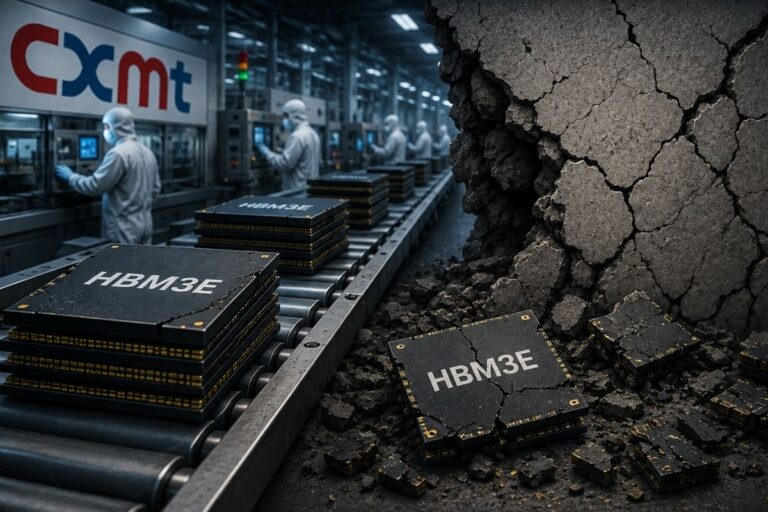
By distributing an open-weight model to consumer devices, Meta serves millions of users while avoiding the massive data center capital expenditures required for cloud-hosted AI workloads.
Offloading model execution to local hardware alters the financial equation for technology companies like Meta Platforms Inc. Hosting artificial intelligence models in centralized data centers requires substantial capital expenditure for server procurement, facility cooling, and electrical infrastructure.
Meta is projecting its capital expenditures will reach between $60 billion and $65 billion, according to Investing.com financial analysis, driven largely by the data centers required to support cloud-hosted AI workloads. Every local installation moves the computing burden from corporate infrastructure directly to personal hardware.
Meta releases its models under open-source terms, such as the Apache 2.0 license. An open-weight model allows developers and individuals to download the core neural network files and run the software locally at no licensing cost.
Users retain control over when the software runs on their devices, meaning they can turn off background processes to prevent continuous electricity draw.
What hardware specs are required for local AI execution?
Running an ambient AI model efficiently requires at least 18 to 24 gigabytes of video random access memory (VRAM), pushing consumer hardware purchase costs well over $1,500.
While the Muse Glimmer software is free to download, running it locally creates specific hardware bottlenecks. Language models of this scale require at least 18 gigabytes to 24 gigabytes of VRAM to execute without relying on slower system memory. VRAM is dedicated memory on a graphics card that temporarily stores the massive datasets needed to render images or process AI tasks.
Standard consumer laptops typically ship with 8 to 16 gigabytes of combined system memory. Acquiring a machine with sufficient VRAM to run ambient AI models pushes consumer purchase costs drastically upward.
Desktop users looking for a dedicated 24GB graphics card like the NVIDIA GeForce RTX 4090 face hardware costs exceeding $1,600, according to retailer ServerBasket.
How does local AI affect battery degradation and thermal stress?
Maintaining the high processing usage required for local AI generates constant heat, accelerating chemical degradation in lithium-ion batteries and permanently reducing maximum capacity.
On mobile devices and laptops, continuous background computation introduces physical wear alongside financial costs. Operating a local agent heavily utilizes the GPU, pushing sustained device temperatures upward within compact laptop chassis.
Lithium-ion batteries are highly sensitive to thermal conditions. When internal battery temperatures exceed 95 degrees Fahrenheit (35 degrees Celsius), the rate of chemical aging increases dramatically, according to RD Batteries. This permanently reduces the maximum battery capacity.
Thermal management systems respond to persistent heat by spinning cooling fans at higher speeds and throttling processor clock rates. A laptop running a local agent will degrade physically faster and perform standard operations slower over time.
How do local AI expenses compare to fixed cloud subscriptions?
Over a two-year lifecycle, the combined electricity and hardware premiums for running a local AI model exceed the $240 annual cost of standard cloud AI subscriptions.
Evaluating the cost of running local AI requires comparing variable personal expenses against fixed cloud subscription pricing. Major cloud AI providers offer access to hosted models for a flat subscription rate, typically $20 per month or $240 annually.
Running a local agent continuously produces a comparable or higher annual cost in electricity alone, before accounting for hardware depreciation or initial purchase premiums. Combining the electricity costs with a $1,000+ hardware price premium results in a total expenditure that exceeds standard cloud subscriptions over a two-year hardware lifecycle.
Local execution ensures that personal information never leaves the device. That privacy comes at a measurable financial and physical cost.
Frequently Asked Questions
Does running local AI models like Muse Glimmer use more electricity? Yes, running a local AI model continuously on a desktop graphics card draws between 200 and 400 watts. This adds approximately 4.8 to 9.6 kilowatt-hours of daily energy use to your household consumption, costing an extra $280 to $560 annually at standard US residential electricity rates.
Why do companies like Meta release open-weight models for free? Distributing an open-weight model directly to consumers allows Meta Platforms Inc. to serve millions of simultaneous users without increasing its own operational server overhead. This offloads the massive electricity and hardware costs of processing AI tasks from corporate data centers directly to the user’s personal equipment.
Can I run Meta’s Muse Glimmer on a standard laptop? Standard consumer laptops typically lack the required memory limits. Running an ambient AI model efficiently requires at least 18 to 24 gigabytes of dedicated VRAM, a hardware specification that usually costs over $1,500 and is only found in premium or enthusiast-grade devices.
Will local AI damage my laptop battery? Continuous background processing generates persistent heat inside a laptop chassis. Sustained operating temperatures above 95 degrees Fahrenheit accelerate the chemical aging of lithium-ion batteries, permanently reducing their maximum charging capacity faster than typical use.