







Why Do Tally-to-BigQuery AI Connectors Fail for Indian Small and Mid-Sized Businesses?
Deploying plug-and-play Tally-to-BigQuery AI connectors for Indian small and mid-sized businesses breaks down in production because unstandardized inventory names, backdated voucher edits, and split Goods and Services Tax ledgers force months of manual data scrubbing before Gemini artificial intelligence agents can run demand forecasting without hallucinating.
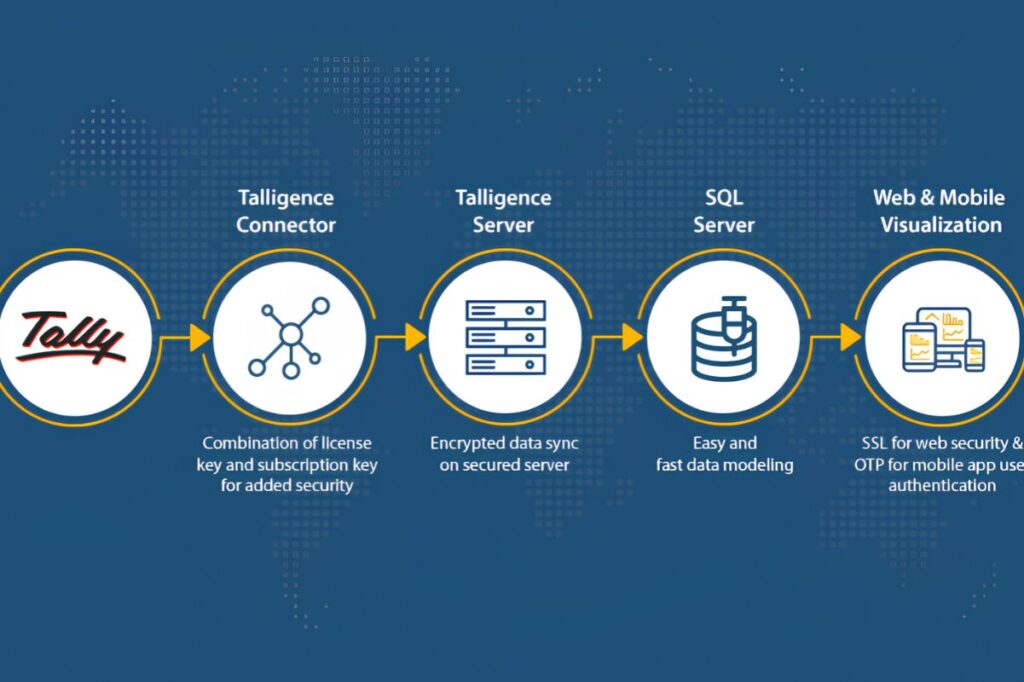
When a mid-market manufacturer or retail distributor attempts to pipe accounting records from Tally Prime into Google BigQuery using automated extract, transform, and load tools, the initial data ingestion frequently fails at the schema-mapping stage.
Automated extract, transform, and load tools, referred to as ETL pipelines, expect uniform database tables where every item code, ledger head, and tax category maps cleanly to a predefined column. Real-world Tally datasets managed across traditional Indian enterprises rarely conform to that structure, creating immediate pipeline exceptions that stall automated data ingestion.
What Are the Three Accounting Landmines in Indian Tally Databases That Break Automated Extraction?
Indian family-run businesses and multi-entity enterprises routinely rely on bookkeeping practices that shatter automated data extraction pipelines, specifically multi-branch godown inventory skew, historical voucher edits, and fragmented tax ledgers.
First, multi-branch godown inventory tracking often features inconsistent stock-item naming conventions. A single raw material or finished stock-keeping unit (SKU) may be entered under different names across warehouses, such as “MS Sheet 10mm” in one godown and “Mild Steel Sheet – 10 mm” in another, causing automated demand forecasting models to treat identical items as entirely separate products.
Second, bookkeepers frequently edit, insert, or backdate historical vouchers to adjust cash flows or correct tax entries after a reporting period closes. Because automated cloud connectors pull incremental updates based on transaction timestamps rather than audit logs, backdated edits alter past ledger balances without triggering automated downstream recalculations in BigQuery.
Third, split Goods and Services Tax (GST) ledgers across multiple state registrations create fragmented purchase and sales records. When an artificial intelligence agent attempts to reconcile supplier bills against e-way bills without unified ledger mapping, the model encounters missing tax matching keys and produces hallucinated inventory projections.
How Do Implementation Realities Compare to the Promoted Accelerators From Cloud Day India 2026?
Implementation realities require extensive custom manual data restructuring before cloud ingestion, contrasting with the frictionless pre-built connectors highlighted at Cloud Day India 2026. At the October gathering in New Delhi, Google Cloud executives showcased pre-built accelerators designed to connect Tally and SAP software directly to BigQuery for growing businesses.
Mainstream coverage of the event adopted that frictionless narrative, presenting cloud data migration as an automated onboarding step requiring little more than a software plugin.
In practice, certified system integrators charge substantial upfront customization fees to clean legacy datasets before any artificial intelligence tool can be pointed at the database. Partner Statements of Work show that migration billing includes weeks of manual table restructuring, ledger consolidation, and duplicate-record removal that precede any automated cloud ingestion.
What Level of Pre-AI Data Hygiene and Staging Is Required to Stop Gemini Forecasting Hallucinations?
Stopping Gemini forecasting hallucinations requires building an intermediate staging environment in BigQuery that consumes up to 80% of total project timelines for ledger cleansing and rule enforcement.
Resolving accounting inconsistencies requires a rigorous data-hygiene pipeline before generative artificial intelligence tools can generate reliable business forecasts.
Mid-market firms must first establish an intermediate staging environment in BigQuery where raw Tally tables undergo rigorous transformation rules. This staging layer cleanses item descriptions, enforces strict date-locking on past vouchers, and unifies fragmented tax ledgers into a single source of truth.
Building and maintaining that intermediate data hygiene layer demands dedicated engineering hours. Operations managers who have successfully deployed predictive analytics after clearing legacy Tally debt report that data preparation consumes up to 80% of total project timelines, leaving only a fraction of the rollout for actual artificial intelligence configuration.
Frequently Asked Questions
Why do automated Tally-to-BigQuery connectors fail during schema mapping?
Automated connectors fail because traditional Tally Prime databases contain unstandardized inventory descriptions, backdated historical voucher edits, and split Goods and Services Tax ledgers that violate the uniform column structures required by cloud database schemas.
How do multi-branch godown naming inconsistencies affect AI demand forecasting?
Inconsistent stock-keeping unit descriptions across warehouses, such as entering the same raw material under different names in separate storage facilities, cause automated forecasting models to treat identical inventory items as completely separate products.
Why do backdated voucher edits corrupt BigQuery financial dashboards?
Because automated cloud connectors pull incremental data updates based on transaction timestamps rather than audit logs, backdated edits alter historical ledger balances in local files without triggering automated downstream recalculations in BigQuery.
How much project time is typically spent on pre-AI data hygiene for Indian SMBs?
According to operational case studies from mid-market IT heads, data preparation and schema cleaning consume up to 80% of total project timelines when moving messy Tally ledgers into cloud analytics environments.