






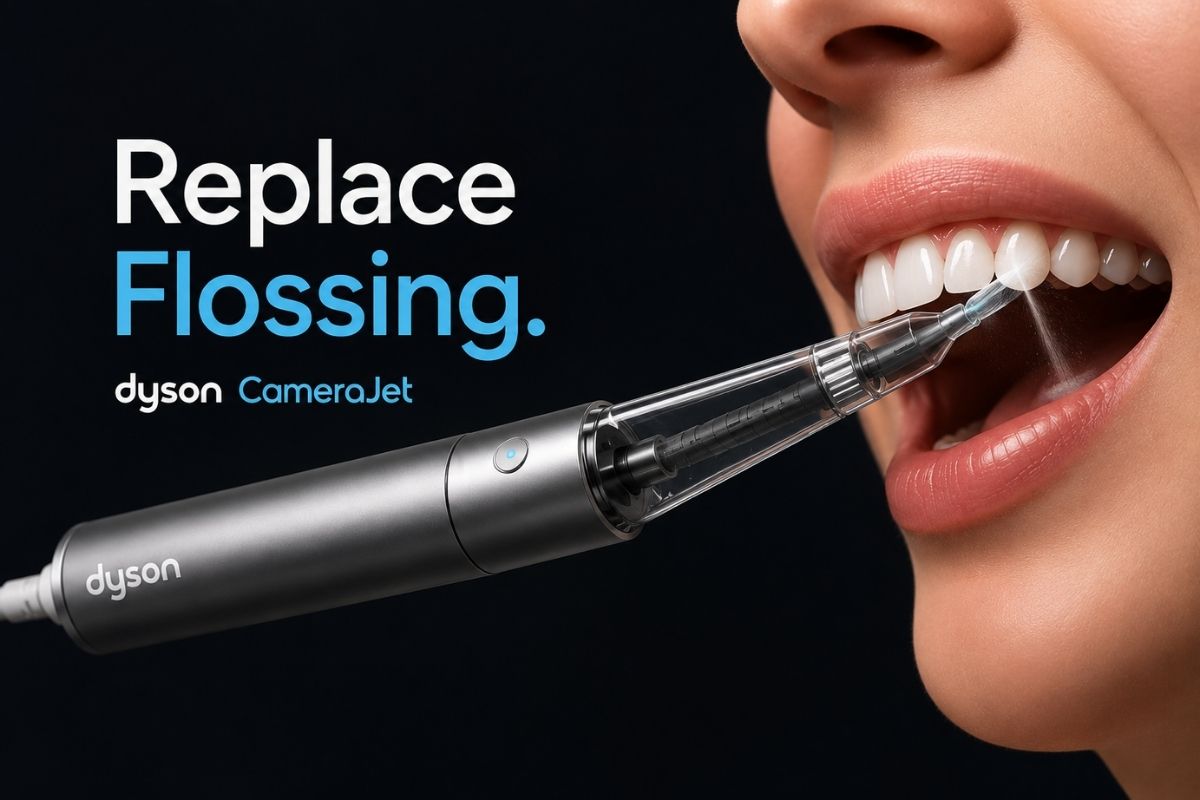
The $499 Dyson CameraJet cannot replace traditional string floss. While the device integrates computer vision to guide water delivery, its 0.1-second pressurized water burst lacks the physical shearing force necessary to scrape away mature bacterial biofilm from tooth enamel. Abandoning mechanical flossing leaves teeth vulnerable to interproximal decay.
The Fluid Dynamics of Biofilm Adhesion
Plaque operates as a biological matrix, not loose debris. Oral bacteria feed on sugars and excrete a sticky polymer that bonds directly to the tooth. Clinical models studying mechanical plaque removal confirm that breaking this adhesion requires direct physical shear stress.
A 0.1-second water pulse flushes out unattached food particles but fails to shear the bonded bacterial matrix anchored in tight spaces between teeth. Dyson’s use of optical sensors to target water delivery—detailed in our breakdown of Dyson CameraJet AI tracking—improves targeting precision. However, optical targeting does not alter the fundamental fluid dynamics required for subgingival plaque debridement.
Contextualizing the 69% Plaque Removal Claim
Dyson markets the CameraJet by claiming it removes 69% more plaque. This metric originates from internal clinical trials comparing the device against manual brushing alone, rather than testing it against proper string flossing.
Device manufacturers routinely use manual brushing as a baseline control in oral irrigator trials. Exceeding the plaque removal rate of brushing alone does not indicate parity with mechanical string floss. The American Dental Association (ADA) categorizes water flossers as an accepted adjunct for reducing gingivitis and flushing particles, particularly for patients with dental hardware. Evidence syntheses from the Cochrane Database of Systematic Reviews maintain that physical friction remains necessary for preventing gum disease in tight interdental spaces.
The Cost of Abandoning Friction
Replacing string floss with water jets allows bacteria to remain undisturbed between adjacent teeth. The subsequent acid generation leads directly to Class II restorations—cavities on hidden surfaces where teeth touch. Accessing this interproximal decay requires dentists to drill through healthy top enamel. Based on ADA benchmark data, these composite resin fillings cost between $150 and $400 per tooth in the United States.
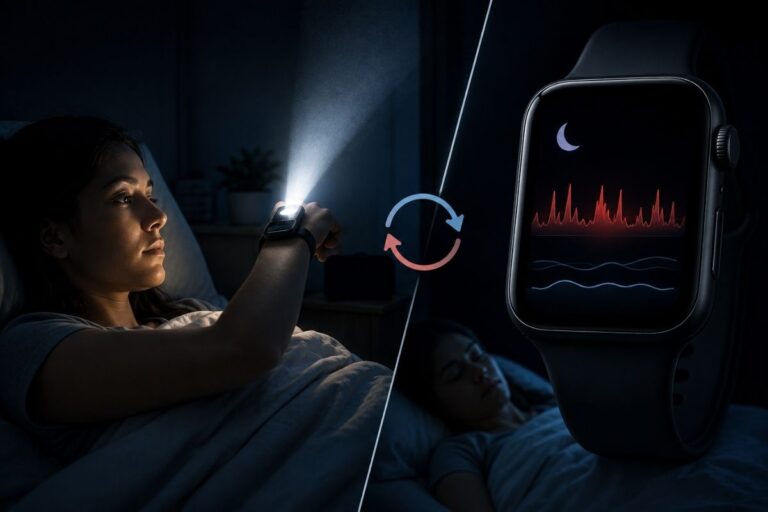
Dyson’s hardware addresses behavioral realities rather than biomechanical perfection. CDC survey data indicates only 34.8% of US adults floss daily. For the 65.2% refusing mechanical flossing, an automated water-jet provides a measurable improvement over brushing alone. Similar to the feedback loops explored in our analysis of smartwatch biosensing, the device generates value by improving daily compliance, not by outperforming established physical interventions.