






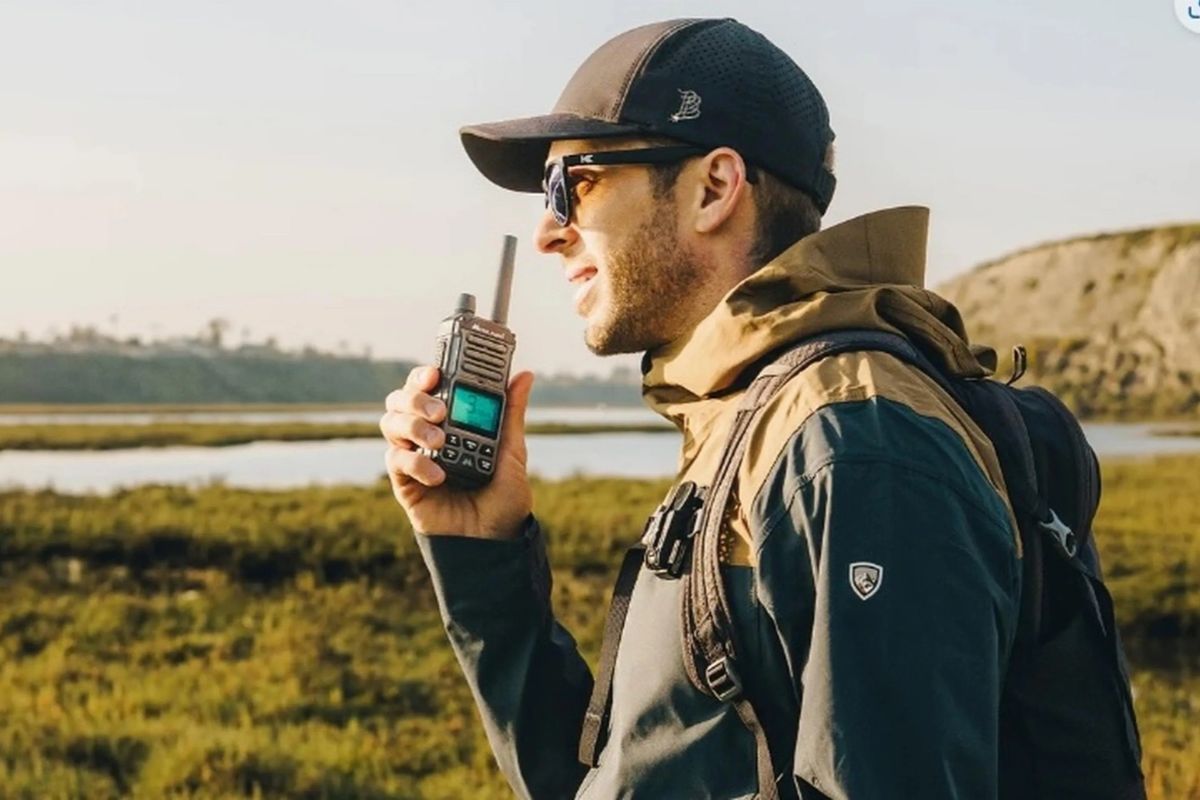
Yes. When employers deploy private 5G walkie-talkies, the network continuously logs your location with extreme precision, even when you are not speaking. While these devices do not record ambient room audio unless someone presses the talk button, workplace tracking on private 5G creates a persistent spatial telemetry grid visible on administrative dashboards.
Can Private 5G Walkie-Talkies Track Your Location in Warehouses?
Private 5G networks, dedicated cellular systems operated directly by a business rather than a public carrier, eliminate communication blind spots, but they also remove unmonitored physical space.
Standard enterprise Wi-Fi struggles with handoffs and structural metal, dropping connections as workers move across concrete aisles. Private cellular architecture solves this by maintaining uninterrupted endpoint connectivity. According to technical specifications published by Ericsson on 5G positioning, baseline cellular standards track endpoints within two to ten meters, scaling down to centimeter-level precision with dedicated base stations.
Because the localized radio scheduler assigns dedicated time slots to each active device, an enterprise handset maintains a sub-10-millisecond connection to on-site access points. The communication tool functions as a persistent tracking beacon.
How Does the Relay and Celona Partnership Change Factory Monitoring?
While technology vendors market industrial cellular networks as worker safety tools, the infrastructure quietly centralizes physical location data on the warehouse floor.
In their partnership announcement, enterprise cellular provider Celona and smart-radio developer Relay emphasize lone-worker protection. The companies state that location context on push-to-talk radios ensures that “when a worker calls for help, responders know who needs it and where to go.”
On the warehouse floor, closing coverage dead zones changes how operations are overseen. The United Electrical, Radio and Machine Workers of America cautions that continuous digital data collection replaces direct observation by floor managers, removing traditional worker discretion during shift routines.
What Worker Telemetry Do Private 5G Dashboards Actually Log?
Private cellular equipment logs hardware identifiers, coverage transitions, and connection duration directly into administrative consoles.
Unlike traditional analog radios that broadcast over an open frequency without an identity ledger, 5G-connected handsets maintain distinct network identities. Systems like the Celona Orchestrator catalog network events through device fingerprinting using International Mobile Equipment Identity (IMEI) numbers.
These administration dashboards log hardware movement across coverage sectors even when the worker transmits no audio. The central console records when a specific handset enters a sector, the exact duration it dwells there, and the timestamp when it shifts into an adjacent aisle.
Why Are Labor Unions Challenging Warehouse 5G Networks?
Labor organizations are pushing back against persistent network tracking, arguing that data gathered under the banner of facility safety is repurposed for worker discipline.
To counter automated tracking, unions are drafting collective bargaining terms that limit digital surveillance. In guidance published for shop stewards, the United Electrical, Radio and Machine Workers of America outlines model contract language stating that “except for investigations into serious misconduct, there will be no secret monitoring.”
These contract proposals require companies to provide written disclosures of all tracking systems and mandate physical status indicators on handsets whenever location logging is active.
Is Workplace Tracking on Private 5G Legal Under Current Law?
Continuous device tracking on private corporate networks is legal across most United States jurisdictions.
When an employer owns the physical building, operates the private cellular spectrum, and purchases the hardware, workers hold little legal expectation of privacy. According to a statutory analysis by Apploye on employee monitoring laws, legal obligations vary significantly by state: New York mandates written notice and formal worker acknowledgment regarding electronic monitoring, whereas Texas requires no employer disclosure whatsoever.
The federal Electronic Communications Privacy Act of 1986 prohibits unauthorized interception of wire and electronic communications, but routine employment consent agreements exempt corporate-owned devices. The hardware eliminates physical dead zones. Statutory law leaves the surveillance gap intact.
Frequently Asked Questions
Can my employer record my conversations through a 5G walkie-talkie?
No, private 5G walkie-talkies like Relay do not record passive room audio by default. Transmission audio is captured and stored only when a worker presses the push-to-talk button, though administrative logs retain the metadata and timestamp of every voice exchange.
How accurate is employee location tracking on a private 5G network?
Standard private cellular networks locate endpoints within two to ten meters through signal timing and beam measurements. Facilities equipped with dense indoor radio deployments can narrow that resolution down to sub-meter positioning.
Do employers have to tell workers they are tracking them on private networks?
Disclosure rules depend entirely on state law. While states like New York require advance written notice of electronic monitoring upon hire, most states allow employers to track worker location on company-owned equipment without prior notification.