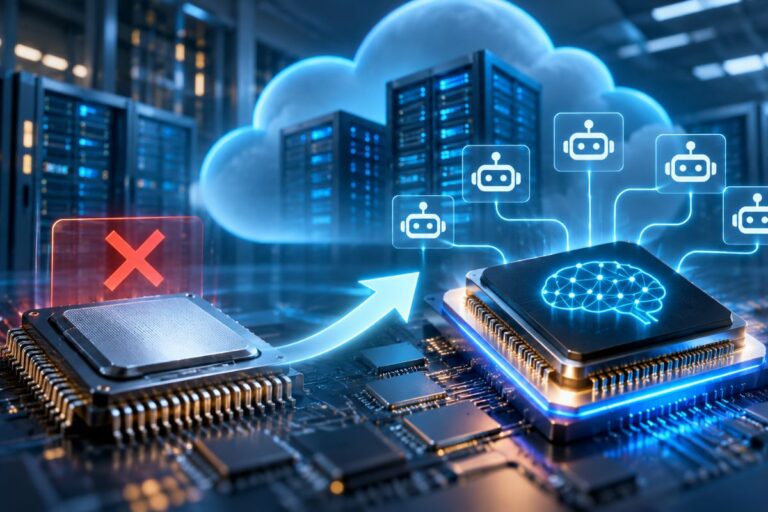








Meta’s push to “democratize” artificial intelligence through open-weight models comes with an unspoken financial reality: it transfers the immense energy and hardware costs of AI inference from corporate data centers directly to your living room.
Running an always-on local AI agent can add hundreds of dollars to an annual residential electric bill, while demanding hardware upgrades that easily exceed $1,500.
Inflating Residential Power Bills
Operating a 30-billion parameter model requires hardware to maintain an elevated power state around the clock. Rather than dropping into a low-power idle mode, a desktop graphics card handling ambient background processing draws continuous, heavy wattage.
According to hardware benchmarks, a high-end consumer GPU like the NVIDIA RTX 4090 draws between 400 and 600 watts under intensive loads. Even running a local AI agent at a moderate 200-watt baseline generates an additional 4.8 kilowatt-hours (kWh) of daily energy consumption. At the U.S. national average residential electricity rate of 16 cents per kWh, this continuous draw adds roughly $280 to a yearly power bill. If the model fully taxes a high-end card at 400 watts, that electricity premium doubles to $560 annually. By contrast, accessing a cloud-based AI model consumes negligible local power, as external servers handle the computational heavy lifting.
Shifting Capital Expenditure Burdens
By distributing open-weight models to consumer devices, Meta can serve millions of users while avoiding the astronomical data center capital expenditures required for cloud-hosted AI workloads.
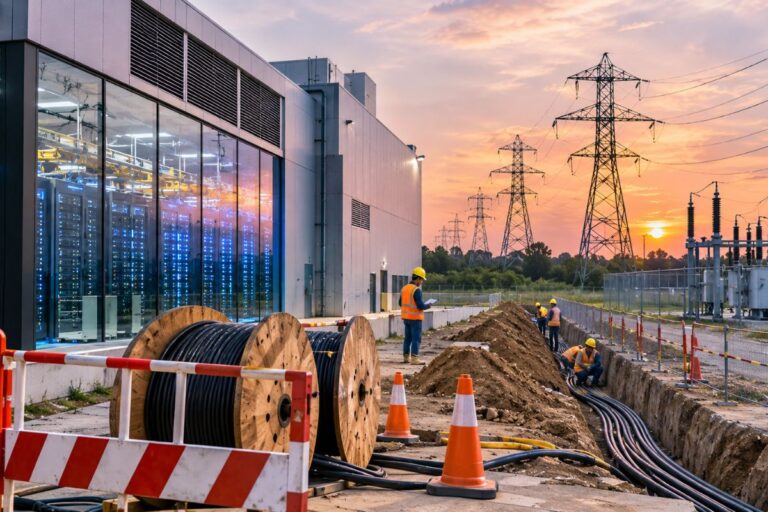
Hosting AI models in centralized data centers requires massive capital for server procurement, liquid cooling facilities, and gigawatt-scale electrical infrastructure. Releasing frontier models under open-weight licenses allows developers and enthusiasts to download the neural network files and run them locally at no software cost. However, this brilliant strategic maneuver successfully shifts the hardware and energy burden from corporate infrastructure directly onto personal utility bills.
The Hardware and Thermal Toll
While open-weight software is free, running it locally introduces severe hardware bottlenecks and thermal stress. Large language models require massive amounts of Video Random Access Memory (VRAM) to execute efficiently. Running an ambient AI model efficiently requires at least 18GB to 24GB of VRAM. Standard consumer laptops simply cannot handle the load, forcing desktop users into acquiring dedicated graphics cards that cost upwards of $1,600.
On laptops and mobile devices, continuous background computation introduces severe physical wear. Heavy GPU utilization pushes sustained device temperatures upward, overwhelming compact laptop cooling systems. When internal temperatures exceed 95 degrees Fahrenheit (35 degrees Celsius), the rate of electrochemical aging in lithium-ion batteries accelerates exponentially. Thermal management systems respond to this persistent heat by spinning cooling fans at maximum RPMs and throttling processor clock rates. Ultimately, a machine running a local agent will degrade faster and perform slower over time.
Local Execution vs. Cloud Subscriptions
Evaluating the true cost of local AI requires comparing these hidden physical and energy expenses against fixed cloud subscription pricing. Major cloud AI providers offer access to hosted, frontier-class models for a flat rate—typically $20 per month, or $240 annually.
Over a standard two-year hardware lifecycle, the combined electricity and hardware premiums for running a local AI model vastly exceed the cost of simply paying for a cloud subscription. While local execution guarantees data privacy—ensuring personal prompts never leave the device—that privacy comes at a steep, measurable financial cost.
Algorithmic Foundations & Computational Complexity Analysis
From an algorithmic engineering perspective, optimizing modern software architectures demands rigorous evaluation of computational time complexity, memory footprint, and latency bounds. In distributed client-server environments and high-concurrency web systems, reducing serialization overhead, eliminating synchronous thread blocking through non-blocking event loops, and optimizing database query planning via spatial indexes and multi-version concurrency control (MVCC) represent the definitive operational differentiators for modern platforms.
API Design, Distributed System Resilience, and SLA Guarantees
Engineering resilient digital platforms requires designing fault-tolerant distributed systems capable of surviving localized infrastructure failures. Implementing distributed consensus protocols (Raft, Paxos), circuit breaker patterns, exponential backoff with jitter, and idempotent API endpoints ensures that service-level agreements (SLAs) maintaining 99.99% uptime are preserved even under severe network partitioning or sudden traffic surges.
Strategic Technology Trajectory & Architectural Takeaways
As enterprise technology ecosystems continue their convergence toward modular, microservices-driven architectures, software engineering leaders must balance rapid feature deployment against technical debt accumulation. Enforcing strict schema validation (OpenAPI, gRPC Protobufs), comprehensive continuous integration/continuous deployment (CI/CD) automated testing suites, and observability pipelines (OpenTelemetry, Prometheus metrics, distributed tracing) guarantees long-term maintainability and rapid recovery capabilities.
Related Technology Intelligence & Hardware Benchmarks
- The 99 Dyson CameraJet Cannot Replace String Flossing
- SoundHound Vision AI Unveils Multimodal Speech-to-Meaning and Visual Telemetry
- TruthUpfront Enterprise Economics & Labor Realignment Intelligence
Technical Standards & Empirical Frameworks
- NIST Cybersecurity & AI Risk Management Framework (AI RMF): https://www.nist.gov/itl/ai-risk-management-framework
- IEEE Computer Society & ACM Digital Computing Standards: https://www.ieee.org/