






Frontier artificial general intelligence (AGI) development confronts an unprecedented hardware concentration bottleneck. Spearheaded by SingularityNET and the OpenCog Hyperon architecture, a $53 million initiative proposes a decentralized alternative to centralized hyperscale data centers. Rather than relying on traditional monolithic cloud architectures—whose scaling hurdles are analyzed in our study of European cloud infrastructure bottlenecks—SingularityNET is deploying a modular, multi-datacenter supercomputing mesh designed to orchestrate heterogeneous compute nodes across geographic boundaries.
This “multi-level cognitive computing network” leverages a mix of high-performance GPUs and AI accelerators paired with decentralized orchestration software. It forms the computational backbone required to train and run AGI models outside the silos of major tech conglomerates.
Hardware Architecture: Moving Beyond Monolithic Data Centers
Training sophisticated models toward AGI demands massive computing resources. Even the most well-funded AI research teams struggle against compute caps. SingularityNET addresses this by pooling distributed computational nodes—ranging from specialized high-density server racks to globally distributed decentralized compute resources.
The first generation of this decentralized supercomputer network integrates top-tier AI hardware:
- Nvidia L40S GPUs and Blackwell GB200 systems for high-throughput AI training and inference.
- AMD Instinct accelerators and Genoa processors for heterogeneous compute flexibility.
- Tenstorrent Wormhole server racks integrated with next-gen Nvidia H200 GPUs.
This hardware mesh operates on a modular architecture. Instead of centralizing compute in one hyperscale facility, the network leverages distributed processing. Nodes can be added dynamically, scaling compute capacity without the massive upfront capital expenditures required for traditional data center expansions.
The ASI Alliance and Decentralized Coordination
To orchestrate this infrastructure, SingularityNET operates under the Artificial Superintelligence (ASI) Alliance, a strategic combination of SingularityNET, Fetch.ai, and Ocean Protocol. The network utilizes cryptographic coordination to manage high-density GPU nodes. This structure mirrors the specialized high-performance clusters seen in Nebius Group’s purpose-built AI infrastructure, but decentralizes the orchestration layer.
SingularityNET has also partnered with NuNet, a startup specializing in pooling idle computational resources from thousands of independent devices. This alliance injects scalability and fault tolerance into the network—if one region experiences an outage, computations seamlessly shift to available nodes elsewhere.
The Software Layer: OpenCog Hyperon and Neural-Symbolic Reasoning
Hardware is only half the equation. The decentralized supercomputer is designed to run OpenCog Hyperon, an open-source AI framework engineered specifically for AGI research. Hyperon utilizes hybrid neural-symbolic computing, blending classic logic-based AI with modern neural networks.
Dr. Ben Goertzel, CEO of SingularityNET, emphasizes that scaling distributed compute is essential to move beyond statistical next-token prediction toward genuine neural-symbolic reasoning. While contemporary benchmark leaders evaluated in our ranking of the smartest frontier AI models rely heavily on massive test-time search, Goertzel argues this initiative marks a necessary “phase transition” toward decentralized cognitive architectures.
“The mission of the computing machine we are creating is to ensure a phase transition from learning on big data and subsequent reproduction of contexts to non-imitative machine thinking based on multi-step reasoning algorithms and dynamic world modeling,” states Goertzel.
Phased Rollout and Global Access
SingularityNET’s $53 million upfront investment targets hardware acquisition, data center modularization, and software development. The project follows a phased rollout:
- Phase 1 Initialization: The first modular supercomputing cluster was slated to come online in late 2024, with full-scale deployment targeting early 2025.
- Tokenized Resource Allocation: Global researchers access the network’s compute power through a tokenized system. This mechanism governs access controls, tracks data contributions, and rewards algorithmic inputs.
- Horizontal Expansion: The network continuously integrates new hardware nodes, expanding its total compute capacity to meet growing AGI research demands.
Overcoming the AGI Bottleneck
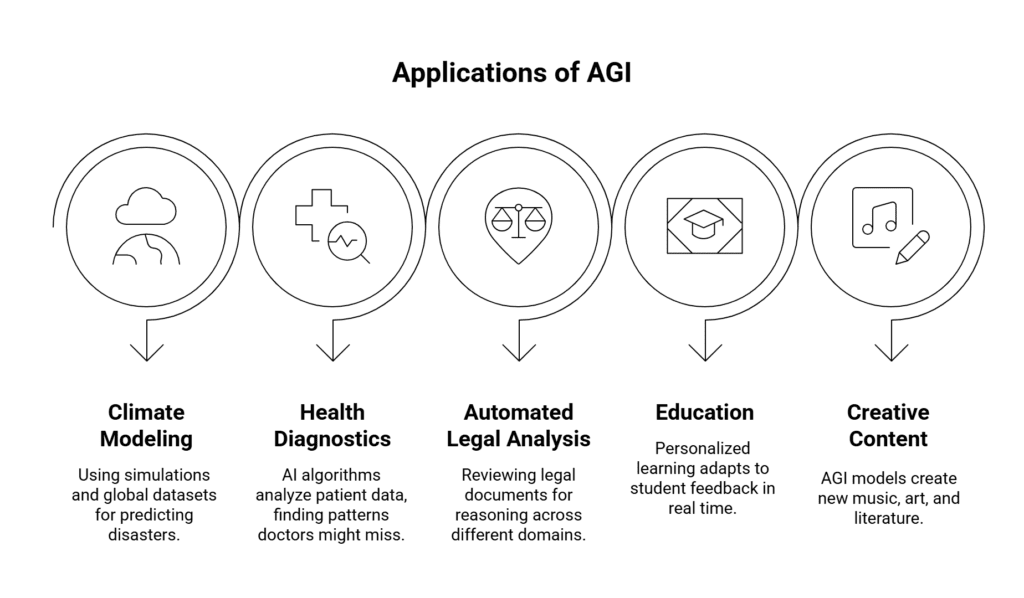
Historically, AGI progress stalled against computational bottlenecks and siloed, proprietary research frameworks. By decentralizing access and scaling hardware horizontally, SingularityNET aims to break both constraints. This infrastructure allows researchers outside of major tech corporations to train massive AI models, run resource-heavy simulations, and collaborate on hybrid neural-symbolic systems.
Challenges remain. Decentralized compute introduces complex latency, data sovereignty, and security hurdles that traditional data centers avoid. Additionally, building public trust around decentralized systems capable of advanced AI modeling requires stringent cryptographic verification and transparent governance.
Despite these hurdles, SingularityNET’s decentralized supercomputer represents a critical shift in AI infrastructure. By moving compute away from centralized hyper-scalers, the project democratizes access to the hardware necessary for the next phase of artificial intelligence development.